400 million watched Videos!
PreOp® Patient Education Worldwide*
PreOp® information resource designed to help you understand the nature of a medical condition and the surgical procedure most commonly used to treat it. * 5 Million Views Monthly
PreOp® Surgery & PostCare™ Video Centers
Healthcare providers from Beth Israel's CareGroup Inc. supported the development of the Heart Video Center.
Healthcare providers from New England Medical Center - Tufts Medical Center supported developing the Orthopedic Video Center.
- Achilles Tendon Repair
- Anterior Cruciate Ligament Arthroscopic Repair
- Arthroscopic Meniscus Repair of Knee
- Bunion Removal Foot Surgery
- Carpal Tunnel Syndrome Repair
- Hip Replacement
- Knee Replacement
- Posterior Lumbar Fusion with Disc Removal
- Rotator Cuff Repair – Arthroscopic
- Rotator Cuff Repair Open
- Shoulder Replacement
Healthcare providers from Harvard Vanguard supported the development of the Women's Video Center.
- Dilation and Curettage D & C
- Breast Biopsy Incisional
- Breast Biopsy Needle
- Breast Biopsy Wire Guide
- Cystoscopy Female
- Hysterectomy Removal of the Uterus
- Hysterectomy Removal of Uterus, Ovaries and Fallopian Tubes
- Hysterectomy Vaginal
- Mastectomy Modified Radical
- Mastectomy Radical
- Mastectomy Total Surgery
- Mesh Sling for Stress Urinary Incontinence, Female
- Myomectomy Abdominal Fibroid Removal
- Myomectomy Vaginal Fibroid Removal
Healthcare providers from New England Medical Center - Tufts Medical Center supported developing the Bariatric Video Center.
Healthcare providers from several Boston healthcare systems, including New England Medical Center, CareGroup Inc., and Harvard Vanguard, supported the General Surgery Video Center's development.
Healthcare providers from New England Medical Center - Tufts Medical Center supported developing the Minimal Surgery Video Center.
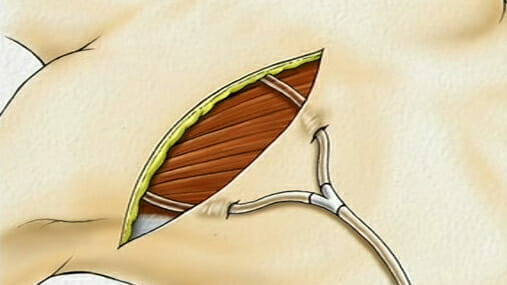
Healthcare providers from several Boston healthcare systems, including New England Medical Center, CareGroup Inc., and Harvard Vanguard, supported the Cancer Surgery Center's development.
- Breast Biopsy Incisional
- Breast Biopsy Needle
- Breast Biopsy Wire Guide
- Cystoscopy Female
- Cystoscopy Male
- Endoscopy – Upper GI
- Endoscopy of Large Intestine
- General Biopsy Surgery
- Hysterectomy Removal of the Uterus
- Hysterectomy Removal of Uterus, Ovaries and Fallopian Tubes
- Mastectomy Modified Radical
- Mastectomy Radical
- Mastectomy Total Surgery
- Myomectomy Abdominal Fibroid Removal
- Myomectomy Vaginal Fibroid Removal
Healthcare providers from several Boston healthcare systems, including New England Medical Center, CareGroup Inc., Iowa Clinic, and Harvard Vanguard, supported the development of the Urology Center.
- Cystoscopy Female
- Cystoscopy Male
- Dilation and Curettage D & C
- Hysterectomy Removal of the Uterus
- Hysterectomy Removal of Uterus, Ovaries and Fallopian Tubes
- Hysterectomy Vaginal
- Inflatable Penile Implant
- Kidney Stone Procedures
- Laparoscopic Radical Prostatectomy
- Laser Vaporization of the Prostate - TURP
- Mesh Sling for Stress Urinary Incontinence, Female
- Myomectomy Abdominal Fibroid Removal
- Myomectomy Vaginal Fibroid Removal
- Open Surgery Radical Prostatectomy
- Robotic Assisted Laparoscopic Radical Prostatectomy
- Transrectal Ultrasound and Prostate Biopsy
- TURBT – Transurethral Resection of Bladder Tumor, Female
- TURBT – Transurethral Resection of Bladder Tumor, Male
- TURP – Transurethral Resection of the Prostate
- Ureteral Stent Placement – Female
- Ureteral Stent Placement, Male
- Vasectomy Surgery
- Vasectomy Surgery – Non-scalpel method